.png)

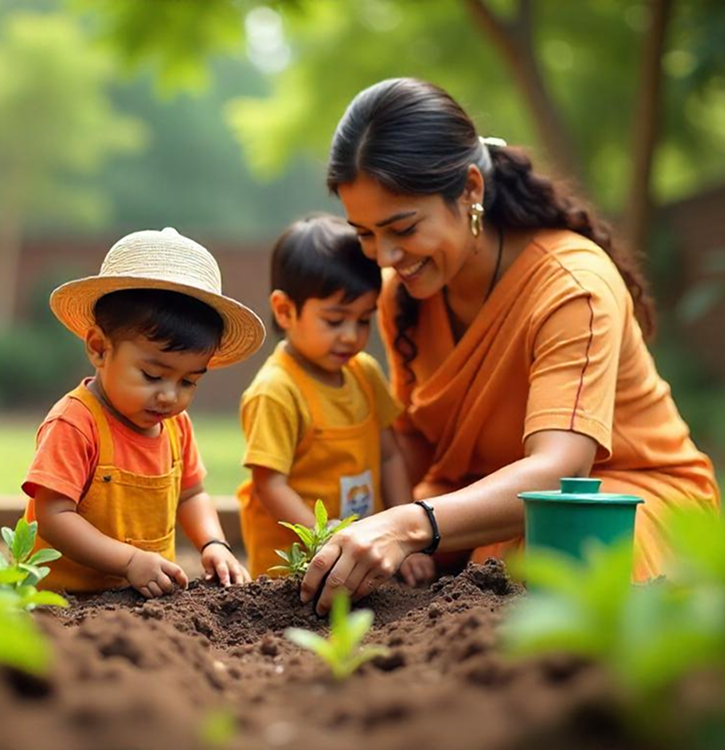
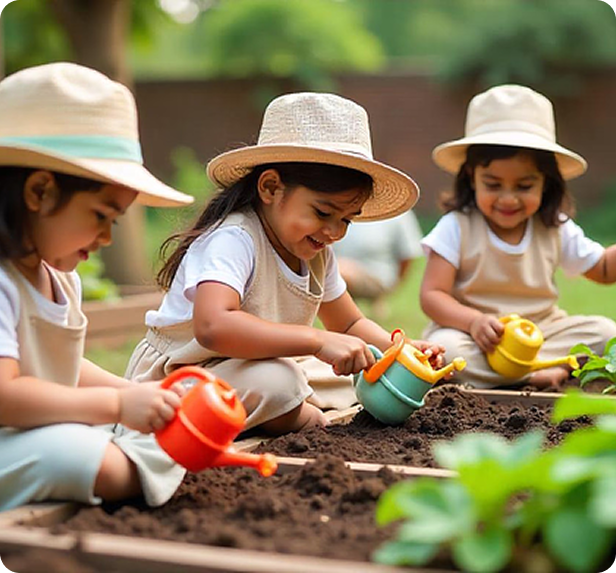
Our Organic Gardening Program introduces children to nature’s rhythms, teaching them:
- Responsibility
- Patience
- Sustainability
- Healthy living
Guided by our eco-friendly mascot Rabbiteco, children engage in playful gardening tasks that build fine motor skills, sensory awareness, and respect for the environment.
As part of the holistic Rocksfordz Kids Knowledge Wheel Curriculum, Organic Gardening complements core areas like 16 Values (teaching care and gratitude), Design Thinking (eco-crafts), and even nutrition education in the Gameboard Café.
Why Gardening is Essential in Preschool and Daycare Education?
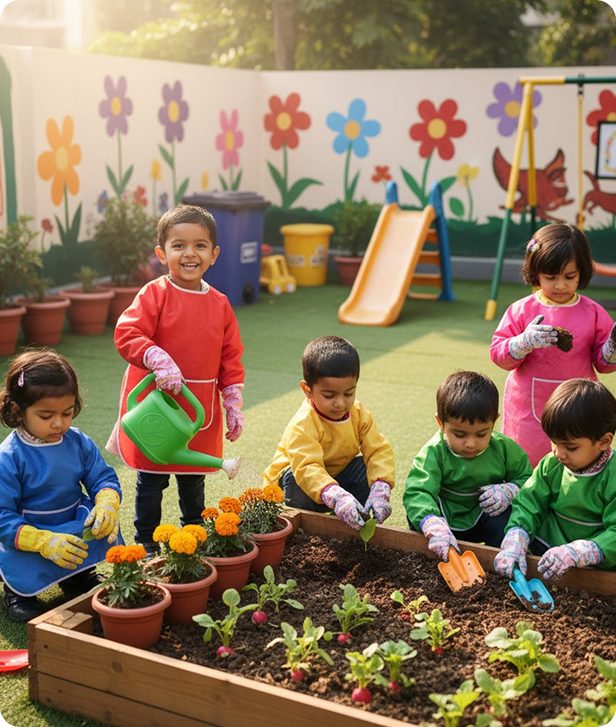
Organic Gardening isn’t just a fun outdoor activity—it’s a foundation for lifelong habits:
1. Teaches Patience & Responsibility: Waiting for seeds to sprout reinforces lessons aligned with 16 Values like perseverance and care.
2. Promotes Sensory Development: From feeling soil textures to smelling herbs, supporting cognitive growth similar to how SwiftSpark Sessions™ stimulate other senses.
3. Encourages Sustainability: Children understand eco-conscious living early, supported by creative projects in
Design Thinking.
4. Builds Healthy Eating Habits: What they grow, they taste—reinforced in the Gameboard Café where farm-to-fork comes alive.
5. Enhances Emotional Well-Being: Nature calms, helping regulate emotions—much like mindfulness taught by MeraMor.
How Organic Gardening
Connects to Holistic Learning?
Creative Eco-Projects: Using recycled materials for planting, linked to Design Thinking.
Farm-to-Fork Lessons: Harvesting herbs and veggies for meals in the Gameboard Café.
Logical Sequencing: Understanding plant life cycles, complementing Logic Thru Games.
Art in Nature: Drawing garden scenes during Creative Time.
Values in Action: Practicing care, patience, and gratitude, central to our 16 Values program.
Examples of Organic Gardening Activities
At Rocksfordz kids
Frequently Asked Questions
FAQs about the Rocksfordz Kids Organic Gardening
Tasks are age-appropriate—like simple watering, planting large seeds, or touching sensory plants guided by Rabbiteco.
Yes. From eco-crafts in Design Thinking to tasting their harvest in the Gameboard Café, it’s fully integrated.
Patience, responsibility, care for living things—aligned with our 16 Values framework.
Absolutely. We use grow bags, window planters, and small herb gardens, connecting nature with daily classroom life.
Children bring home plants and eco-projects via the Toy and Books Library, encouraging green habits at home.